
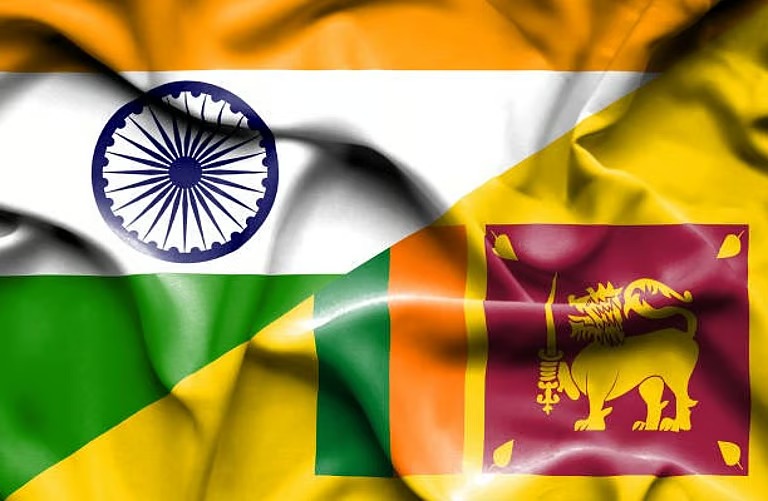
India and Sri Lanka share a civilizational connection that spans for more than 3000 years. Linked by the narrow Palk Strait and the Rama Setu, the two regions were deeply interconnected in culture, religion, language, trade, and people-to-people relations long before modern borders existed. Sri Lanka’s Sinhalese identity, Theravada Buddhist heritage, Tamil Shaiva traditions, linguistic influences, and shared traditional worldview show strong historical links with the Indian subcontinent, along with contributions from local and regional developments. Ancient texts consistently portrayed Sri Lanka as an integral part of the broader Indic cultural sphere. This organic unity persisted through centuries of migration, marriage alliances, temple traditions, and spiritual exchanges. However, British colonial policies deliberately disrupted these ties by imposing an artificial administrative separation, treating the two regions as entirely distinct entities and weakening cross-strait cultural, religious, and linguistic connections.
Legendary and Early Ancient Period (543 BCE – 3rd Century BCE): Foundations of Sinhalese Identity and Buddhism
The historical connection begins around 543 BCE with the arrival of Prince Vijaya, an exiled Indian prince from the Vanga region, along with his 700 followers. According to the Mahavamsa (Chapter 7), after setting aside his earlier consort, Vijaya married a queen from the Pandya kingdom in South India. The Pandya king sent his daughter as Vijaya’s bride, along with rich valuables, jewels, money, and provisions. At the king’s request, subjects offered their daughters in marriage to Vijaya’s followers. Around 1,000 families comprising of 18 communities arrived at the ancient harbour of Manthai (old name Maathotta, present-day Mannar), a major port linked archaeologically to the Pandya port of Korkai in Tamil Nadu. This marriage alliance and large-scale migration strengthened the early cultural foundations of the Sinhalese kingdom.
Ancient Indian epics further embedded Sri Lanka within the Indic worldview. It was Kubera the original ruler of Lanka before his brother Ravana forced him out. Then Ramayana depicts Sri lank as Ravana’s kingdom, with Lord Rama’s army constructing the Rama Setu to rescue Sita. The Mahabharata and Śrīmad-Bhāgavatam (Bhāgavata Purāṇa 5.19.29-30) name Siṁhala and Laṅkā as part of the Indic islands. Claudius Ptolemy’s Geography (150 CE) maps the island as Taprobane, separated from India only by a narrow strait.Even today, many Indians visit Ashoka Vanam in the Sri Lankan highlands to see where Sita stayed in the Ramayana
A defining cultural milestone occurred in the 3rd century BCE (250 BCE) when Mauryan Emperor Ashoka sent his son Arhat Mahinda and daughter Sanghamitra to Sri Lanka, which was ruled by King Devanampiya Tissa. Sanghamitra played a key role in introducing Theravada Buddhism, bringing a sacred Bodhi Tree sapling from Bodh Gaya and helping establish the first monasteries. Sri Lanka became a major centre for preserving the Pali Canon (Tripitaka), committed to writing around 30 BCE.
Classical and Early Medieval Period (3rd Century BCE – 10th Century CE): Trade, Cultural Exchange, and Tamil Settlements
From the 3rd century BCE onward, vibrant maritime trade flourished across the Palk Strait, with strong links between Pandya ports such as Korkai and Manthai (Mannar). Linguistic influences flowed both ways, while Tamil communities from South India settled in northern Sri Lanka. The Pandya dynasty played a significant role in spreading Shaiva and Murugan worship, particularly in the southern parts of Sri Lanka. The historic Kataragama (Kathirkamam) Murugan temple is traditionally associated with Pandya patronage. Archaeological evidence includes fish symbols, the emblem of the Pandya dynasty, found on around 18 stone inscriptions in at least five locations in the southeast and eastern parts of Sri Lanka.
This cultural continuity found profound expression in the 7th century CE through the Tamil Shaiva saint Thirugnana Sambandar. From Rameswaram, he visited and offered prayers to Lord Shiva at Thirukonamalai (Koneswaram) and Thiruketheeswaram, composing padhigams in the Tevaram that treated these temples as sacred extensions of Tamil Shaiva tradition.(Tamil Shaiva Sinthathantha people used to read Tamil padhigams which connects SriLanka and Tamil Nadu, even today these padhigams are being recited in these temples)
Medieval Political-Military Ties (993–1070 CE and 13th Century): Chola and Pandya Influence
Between 993 and 1017 CE, the Chola Empire under Rajaraja I and his son Rajendra I conquered the Anuradhapura Kingdom. Rajaraja, I initiated the campaign around 993 CE, and Rajendra I completed the conquest by 1017 CE, incorporating northern and parts of Sri Lanka as a province of the Chola Empire. The Cholas ruled for approximately 70–77 years until around 1070 CE, when Vijayabahu I expelled them and restored Sinhalese sovereignty. This period introduced sustained Tamil Hindu settlements, Tamil language and administration, and significant temple expansions and renovations especially at Koneswaram and Ketheeswaram. Chola patronage brought South Indian architectural styles, Shiva temples, and bronze sculptures to the island, further deepening Tamil Shaiva cultural tradition.
Further Pandya incursions in the 13th century strengthened Tamil cultural presence and contributed to the emergence of the Jaffna Kingdom.
Before British rule, India and Sri Lanka remained organically connected through culture, religion (Buddhism and Hinduism), language (Prakrit-Sinhala and Tamil influences), trade, marriage alliances, and temple traditions. Pilgrims, merchants, and saints moved freely across the Palk Strait, treating the two regions as extensions of a shared civilizational space.
Colonial Period (16th–19th Century): European Rule and British Administrative & Cultural Separation
Portuguese and Dutch colonial powers influenced both India and Sri Lanka from the 16th to the 18th centuries. Despite European domination, traditional trade networks across the Palk Strait and the migration of Indian labour continued to sustain deep cultural and economic ties between the two regions.
The decisive break came during the Napoleonic Wars. Fearing that French control over the Dutch might allow France to gain influence in Sri Lanka, Britain occupied the coastal areas of the island (which they called Ceylon) in 1795–1796. For a brief period, these territories were administered from the Madras Presidency in India. However, the British deliberately detached Ceylon (Sri Lanka) from Indian administration. In 1802, under the Treaty of Amiens, the Dutch-held maritime provinces were formally confirmed as British territory, and Ceylon (Sri Lanka) was established as a separate British Crown Colony with its own governor and civil service. In 1815, the Kandyan Convention brought the entire island, including the interior Kingdom of Kandy, under full British control. The Colebrooke-Cameron Reforms of the 1830s further consolidated Ceylon’s distinct administrative identity, completely separating it from the Indian presidencies.
The British played a huge role in separating the two countries. By creating distinct colonial administrations, separate education systems, and independent legal and governance structures, they deliberately weakened the long-standing cultural, religious, and linguistic ties. Cross-strait pilgrimages and exchanges faced new bureaucratic hurdles. Colonial historiography and policies portrayed India and Ceylon (Sri Lanka) as unrelated entities, downplaying shared heritage. Divide-and-rule strategies and separate curricula eroded the sense of common civilizational belonging that had existed for millennia. What was once a seamless cultural continuum across the Palk Strait was artificially fractured into two distinct colonial possessions.
Despite these colonial policies, deep historical and cultural links between India and Sri Lanka endured. A powerful example was Swami Vivekananda’s visit to Sri Lanka in January 1897. From 15 to 25 January, he delivered a notable lecture on Vedant (Vedantham) at Jaffna Hindu College to a large audience. On the evening of 24 January, he was welcomed with a grand torchlight procession attended by approximately 15,000 people, accompanied by Carnatic music. During the procession, he worshipped at the ancient Shiva and Kathirasan temples in Jaffna. His journey itself highlighted the close physical and cultural connection he crossed the Palk Strait by steamship, entered via Elephant Pass, and continued through Anuradhapura using local bullock carts when needed.
Post-Independence Era (1947–Present): Modern Diplomatic and Cultural Reconnection
India gained independence in 1947 and Sri Lanka in 1948. Diplomatic ties were quickly re-established, followed by the 1974 Maritime Boundary Agreement, 1977 Cultural Cooperation Agreement, 1987 Indo-Sri Lanka Accord, and 2000 Free Trade Agreement, along with ongoing connectivity projects. These efforts have actively worked to revive the ancient bonds that British policies had strained.
Festivals
The vibrant array of Hindu festivals in Sri Lanka serves as a great example to a shared civilizational bond with India that has flourished for many years and remains deeply vibrant today. From the ancient solar traditions of Thai Pongal and the Tamil New Year to the sacred night-long prayers of Maha Shivaratri, these rituals represent an unbroken continuity of faith that has crossed the Palk Strait since antiquity. Even now, the nationwide glow of Deepavali oil lamps, the colourful spring celebrations of Holi, and the intense, ancient asceticism of the Nallur Kandaswamy and Kataragama festivals prove that these Indian-rooted traditions are not just historical relics, but a thriving heritage that continues to unite the two nations through shared devotion and seasonal rhythms.
Conclusion
The connection between India and Sri Lanka is a profound legacy of faith and history that stretches back to the Ramayana era, where the island’s central highlands specifically sites like Ashoka Vanam remain sacred to modern pilgrims as the legendary setting of Sita’s resilience.
Prince Vijaya’s legendary arrival and his marriage alliance with the Pandya kingdom (543 BCE), the introduction of Buddhism by Mahinda and Sanghamitra in the 3rd century BCE, Pandya and Chola contributions to Shaiva and Murugan worship, the influence of Tamil bhakti saints, and the Chola political integration (993–1070 CE), India and Sri Lanka maintained deep connections in culture, religion, language, and trade for centuries.
The decisive disruption came with British colonial intervention. In 1795–1796, during the Napoleonic Wars, Britain occupied the coastal areas of Ceylon (Sri Lanka). Initially administered from the Madras Presidency, the island was deliberately detached. In 1802, under the Treaty of Amiens, the Dutch-held territories were formally confirmed as British, and Ceylon (Sri Lanka) became a separate Crown Colony with its own governor and administration. The Kandyan Convention of 1815 brought the entire island under British rule. Subsequent reforms, including the Colebrooke-Cameron Reforms of the 1830s, further solidified Ceylon’s distinct administrative identity, completely separating it from the Indian presidencies.
Yet the enduring spiritual, linguistic, artistic, and religious bonds symbolised by the Rama Setu and sustained through centuries of shared heritage proved remarkably resilient. Today, post-independence efforts continue to restore and strengthen this timeless friendship and common civilizational legacy between the two nations.
More Stories
Aadi Veli: A Living Tradition of Ancestral Remembrance
Dakshinapatha Monthly Bulletin April 2026
Dakshinapatha Monthly Bulletin March 2026